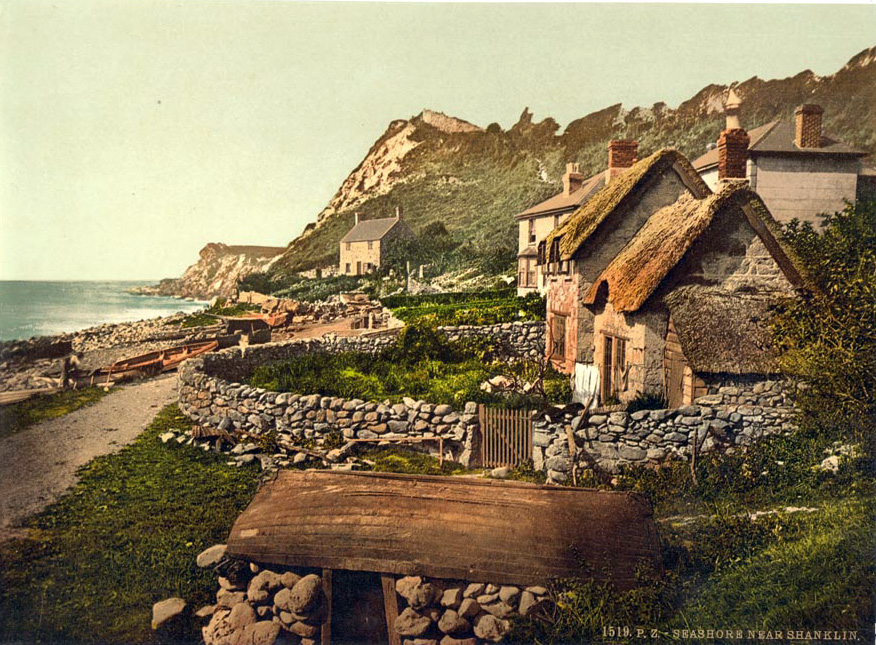
George Gray and Ann Lock
The 1841 Census lists George Gray as the head of the household, aged 20 years (his baptismal record indicated he would have been 23 years but these records can be difficult with human errors) and his occupation as a ‘Mason Apprentice’ living in Shanklin. His wife Ann was listed as 20 years living in Shanklin.
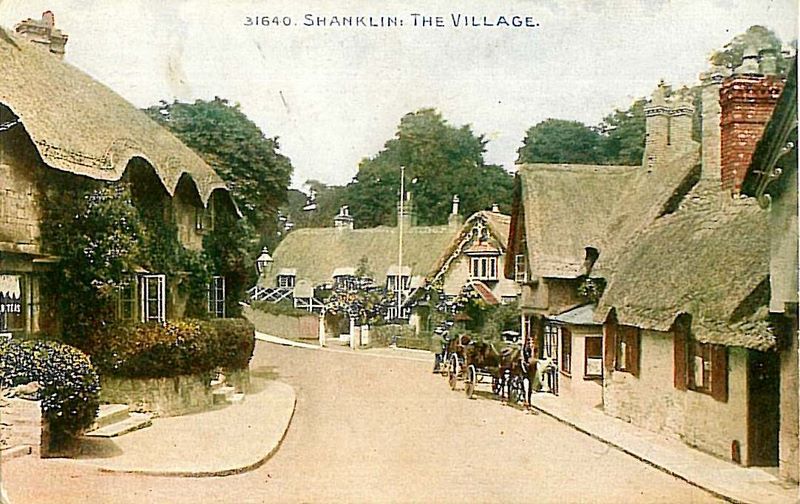
Shanklin, Isle of Wight, England
Unlike the brief abrupt description of Whitwell, the 1839 Vectis Directory waxes lyrical about Shanklin; “deservedly famed and much-admired village Shanklin ; here the stranger will receive all the gratification his most sanguine imagination may have painted. The towering cliff that rises in bold and imposing grandeur on the south, its extensive marine prospect and its inlaid beauties, surrounded as it is with elms of the most luxuriant description, its deeply interesting chine, its cheerful hotels and neat cottages, charm the eye and call forth admiration and delight … After traversing these pleasing scenes, should the tourist need refreshment, the old-established Shanklin hotel will be found at the head of the chine, where every attention is paid to the comfort of the visitor. Another house for the entertainment and accommodation of strangers and visitors is situated at the entrance of Shanklin, commanding an extensive marine prospect, and affording every advantage and attendance.” 2
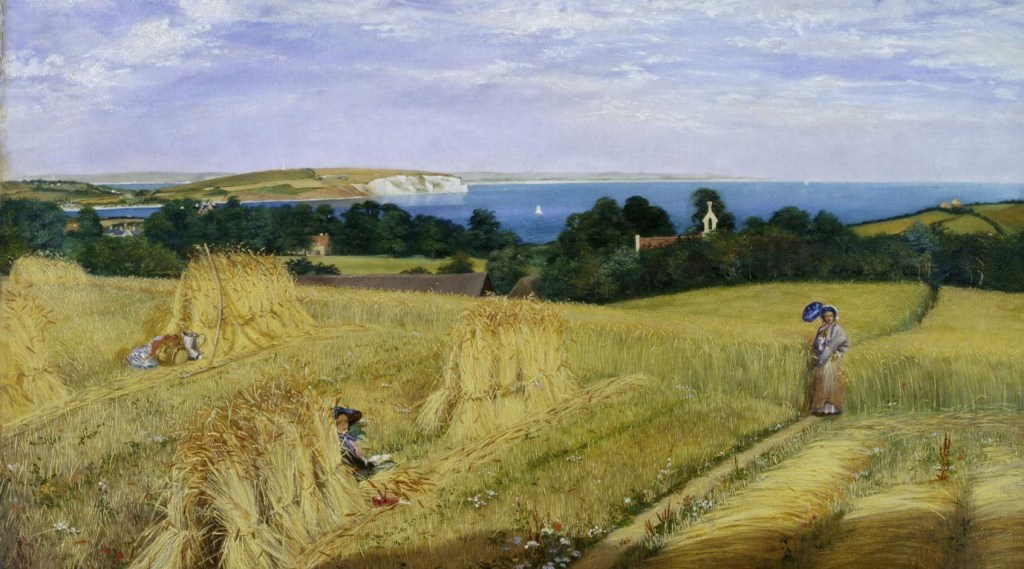
‘Down To The Coast’ Artscape Professor Robin McInnes
The Shanklin Chine; “Chine is a word used only in the Isle of Wight and Dorset and means a deep narrow ravine with water running down to the sea. You can also think of an animal’s backbone or Chine of a boat, a deep, narrow scooped out cup, as in the Saxon for Shanklin – Scenchlinc, cup in the rising ground.
The Chine spring rises in the Downs and can be spectacular in heavy rain, especially at night with the lights. There are many mineral springs (chalybeate) all over the Chine and Shanklin, discovered by Dr Fraser, Charles II’s physician. Shanklin briefly became a Spa in Victorian times and the treatment rooms are still there on the site of the Royal Spa Hotel. Over the centuries, the Chine was used mainly for smuggling, so prevalent in the 18th Century, that the Customs and Excise officers had to be stationed in the Old Village.” 3
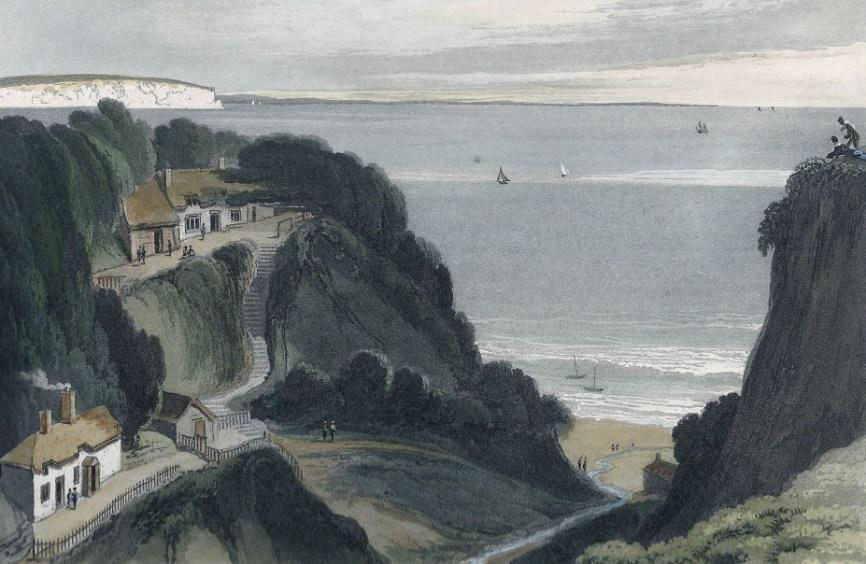
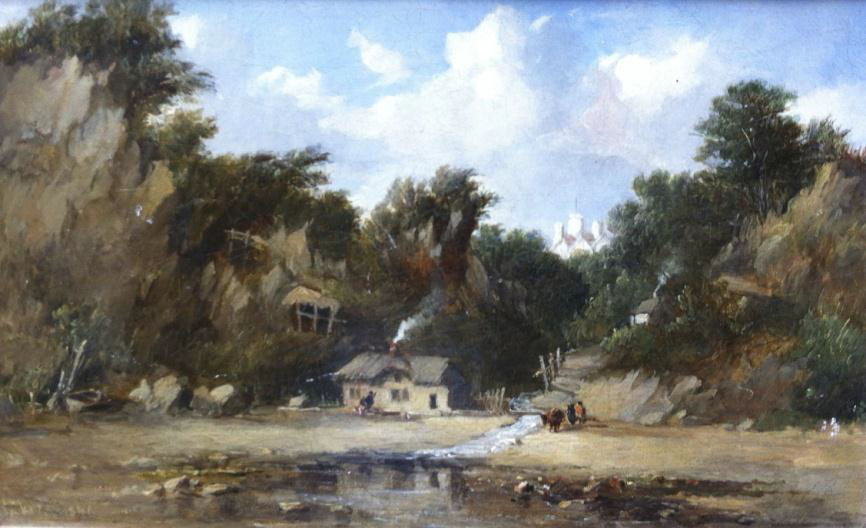
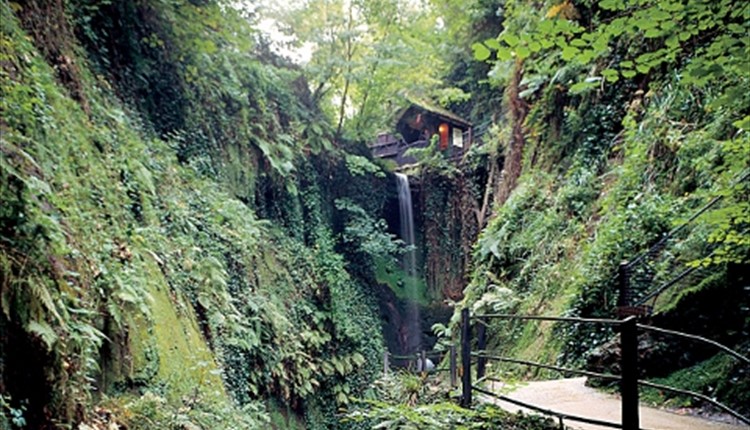
The Shanklin Chine is the oldest tourist attraction on the Isle of Wight, opening in 1817. It “cuts its way from Shanklin Old Village to the sandy beach and Esplanade far below and has always been a magnet for renowned artists, photographers and those seeking respite from the hustle and bustle of modern age. Shanklin Chine boasts many famous visitors who have stopped to paint, draw and write about the natural beauty it beholds. From author Jane Austen to romanticist landscape painter J.M.W Turner, all have been attracted by the timeless and magical beauty captured in this remarkable gorge, with its waterfall, shear chasm-like sides decked in lush vegetation and towering trees.” 4
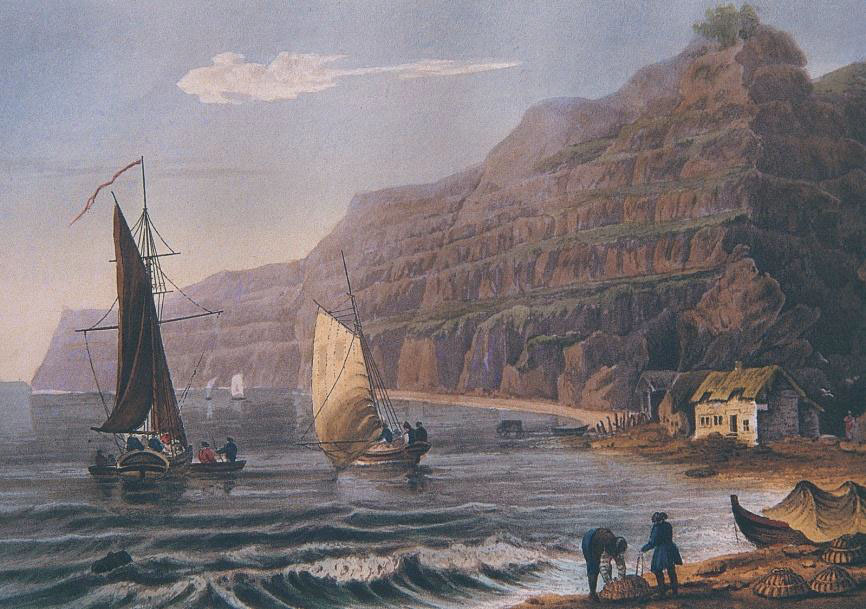

Late 19th Century Etching
George and Ann Gray – Family Life 1841 -1848
1. Sarah Ann – 1841
George and Ann Gray’s first child, a daughter, Sarah Ann was born on the 15 July 1841 and was baptised into the ‘Christian Bible’ or Methodist church in the Shanklin Chapel on 29 August 1841 George Gray stated his occupation as ‘Stone Mason.’
2. Maurice Gray – 1843
George and Ann Gray’s second child was Maurice Gray was born on 7 February 1843.
George Gray, Builder, Insolvency – 1844
Stonemasonry, or work as a mason was not an easy occupation. A diary of a stonemason named Arthur Peck a Hertford Stonemason gives some insights into the work: On the 29 September 1862 he wrote: ‘I have been at work in the yard ten years today’, which is to say he started work when he was not quite fourteen.’ A descendent of Arthur Peck writes further: ‘His work would have taken him to many places in Hertfordshire and sometimes beyond … The work could be very hard at times especially the moving of stone. Large blocks of Bath, Portland and York stone would arrive by rail or barge and needed to be carted to the yard before work could begin … The work itself was varied and included carving, paving, fixing sinks and chimneys as well as the memorial work … In spite of the skill and effort involved however, the work was not well paid’ 5
It is clear by later work that George Gray undertook when in New South Wales, that he was not just a stonemason but had skills in building, planning and contracting workers for the houses he built.
In the insolvency records of the London Gazette and The Juror recording his insolvency on 29 March 1844 it is interesting to note the description of George Gray as being not only a stonemason but also a builder.
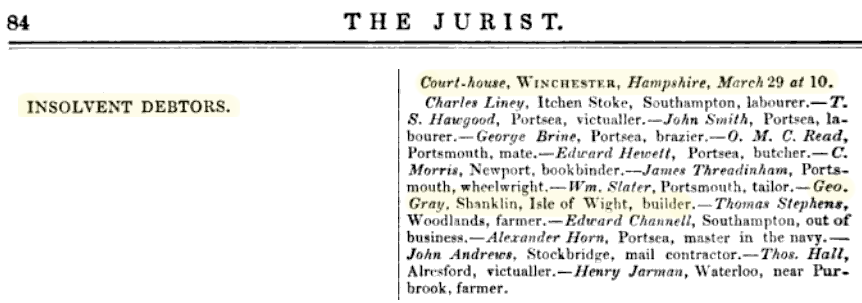
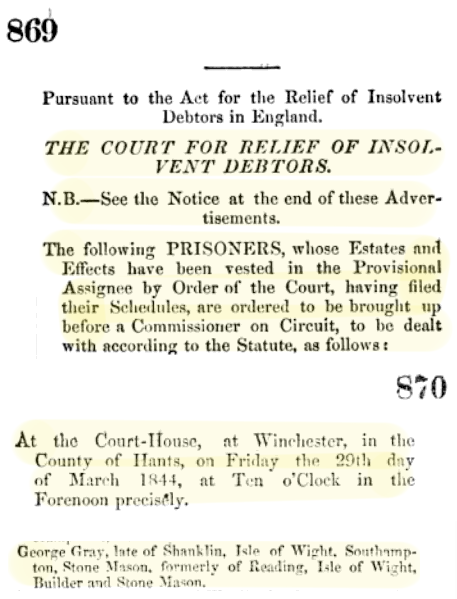
In 1844 George Gray a stonemason of Shanklin on the Isle of Wight was obviously in financial trouble and was brought before the debtors and insolvency court.
“COUNTRY INSOLVENTS. The following PRISONERS, are ordered to be brought before Commissioner Circuit, to be dealt with according to the Statute : At the Court House, Winchester, the 29th day of March, 1844 … —George Gray. Shanklin, Isle of Wight, Southampton, stone mason” 6
He was listed in the Perry’s Bankrupt and Insolvent Gazette on 9 March 1844 to attend Winchester Court on the 29th March 1844. The Salisbury and Winchester Journal reports; “On Friday, in a Court for the relief of Insolvent Debtors, held at Winchester, before W. J. Law, Esq., Commissioner … George Gray to be detained until possession of a house be given up.”
The Insolvent Debtors (England) Act of 1813, was legislated in response to the many poor ending up in gaol for debt. The Court for the Relief of Insolvent Debtors provided an opportunity that; “Those imprisoned for debt could apply to the court to be released, unless they were in trade or guilty of fraudulent or other dishonest behaviour, by reaching an agreement with their creditors that ensured a fair distribution of their present and future assets.” 7
Debtors Prison: Debtors were not like modern prisoners who serve fixed sentences. In many cases they could secure their release only when they had paid their debts or reached an agreement with their creditors. Because debtors had to pay to be housed within the prisons, their debts could actually increase while incarcerated, so some would spend years or even decades in jail. In the 18th and 19th centuries, a number of laws were passed that did enable a proportion of debtors to be released if they fulfilled certain conditions.8
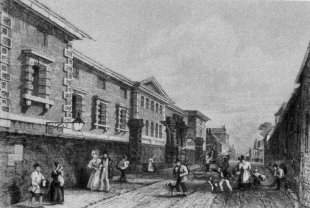
Winchester Gaol -Artist: Shepherd G S Engraver: Shury J & son Published by: Jas Robbins, Winchester
Although debtors prisons were not abolished in England until 1869 there was an Insolvent Debtors Act Amendment Bill HL Deb 25 July 1844 vol 76 cc1387-411 passed on 7 August 1844 which was essentially a bill for the abolition of imprisonment for debts under £20. Wikipedia notes – imprisonment for debt abolished in England passed on 9 August 1844. It is possible to consider that George Gray’s subsequent discharge from the Winchestor Gaol debtors prison was perhaps as a result of this bill being passed and his debts being under £20. A little of the debate is recorded below as reported in the Bolton Chronicle on 10 Aug 1844. Then again perhaps he did in fact manage to pay his debts enabling him to be released. Of note in relation to George Gray as a tradesman, is the fact that there appeared to be busier times and times when work was more difficult to obtain, perhaps even due to the weather, Mr Aglionby noted this and the difficulty in covering their costs in the leaner times.
INSOLVENT debtors BILL The SOLICITOR-GENERAL explained its object to threefold—the Amendment of the law of amendment, the law of cessio bonorum, the abolition of imprisonment for debts below 20/., and the improvement of the machinery of the Bankrupt Court. He admitted that this bill would tend to dimmish the facility of credit, but he believed that such facility was rather disadvantage than benefit; and argued that tradesmen would probably more careful whom they trusted when they found abolition of imprisonment, he set the useless sufferings of any disadvantage, however, which could produced the they were detained. miserable prisoners unable to meet the demands for which upon important subject, especially In the absence M, PHILIPS and Mr. WORTLEY objected to legislate than be present lateness of the session would allow. Mr. AGLIONBY was of the same opinion. He observed that there were classes of workmen who were unable during some part of the year to obtain employment, and whose subsistence during that period depended on the credit of the wages to be earned by them in the busier period. This credit during that period depended on the credit of the balance of advantages and disadvantages, believed that the abolition of the creditor’s remedy against the debtor’s person would operate injuriously to working classes. Mr. Spooner concurred these views; and asked why, if the abolition were expedient, it should not extended to all cases would operate injuriously to working classes.9
George Gray remained in Winchester gaol for about eight months until on Saturday 10 August 1844 the newspaper reports on George Gray; “At the Court for the Relief of Insolvent Debtors held at Winchester on Thursday last, before John Greathed Harris, Esq., … George Gray … [was] ordered to be discharged.” 10
3. George Abner – 1846
On 9 April 1846, George and Ann Gray’s third child, George Abner Gray was born, again like his sister and brother in Shanklin, Isle of Wight, England. When George Abner Gray was born his father, George, was 28 and his mother, Ann was 24 years of age. Like his sister Sarah Ann and brother Maurice, he was baptised in the Shanklin Chapel, on May 31, 1846 , this time by Rev John Perkins. His father George lists his occupation again as a Mason.
4. James Henry Ernest – 1848
The final child of George and Ann Gray, James Henry Ernest was born on 9 September 1848 in Shanklin, Hampshire, when George Abner was 2 years old. He was baptised at the Bible Church Chapel Shanklin.
A builder and stonemason who became insolvent in the early 1840’s which was known as the ‘hungry forties’ : ‘Britain became the richest country in the world, but many people worked long hours in harsh conditions. Yet, overall, standards of living were rising. While the 1840s were a bad time for workers and the poor—they were dubbed “the hungry forties”—overall the trend was toward a less precarious life.’ 6
References
- The Vectis Directory of Isle of Wight General diode, containing a classification of the nobility, gentry, banker, professional gentlemen, and traders, resident in the towns of Newport, Ryde, Cowes, and Yarmouth, also of the villages generally, including Ventnor, Shanklin, Carisbrooke published by William Lambert 1839
- The Vectis Directory of Isle of Wight General diode, containing a classification of the nobility, gentry, banker, professional gentlemen, and traders, resident in the towns of Newport, Ryde, Cowes, and Yarmouth, also of the villages generally, including Ventnor, Shanklin, Carisbrooke published by William Lambert 1839
- https://www.shanklinchine.co.uk/
- https://www.visitisleofwight.co.uk/things-to-do/shanklin-chine-p147941
- https://www.ourhertfordandware.org.uk/content/people/the-diary-of-a-nineteenth-century-stonemason
- 24 March 1844 ‘The Bells’ New Weekly Messenger Newspaper.
- Insolvent Debtors (England) Act 1813 https://en.wikipedia.org/wiki/Insolvent_Debtors_(England)_Act_1813
- https://www.historyextra.com/period/victorian/debtors-prisons-marhsalsea-london-why-created-when-abolished/
- Bolton Chronicle – Saturday 10 August 1844 page 4 – British Newspapers Archive
- https://www.thegazette.co.uk/London/issue/18409/page/2245/data.pdf
 George Gray - Stonemason & Builder