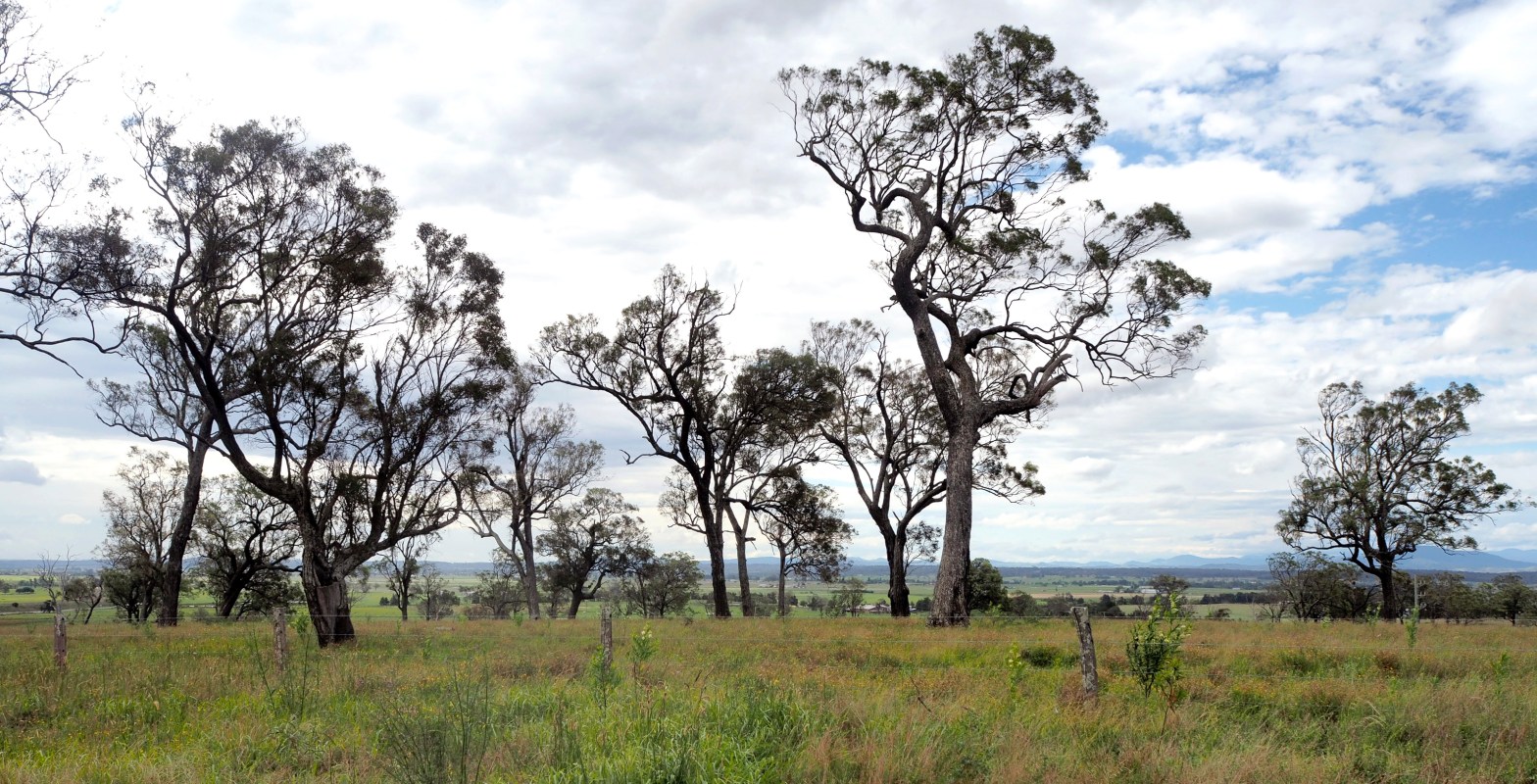
George Gray – New Freugh
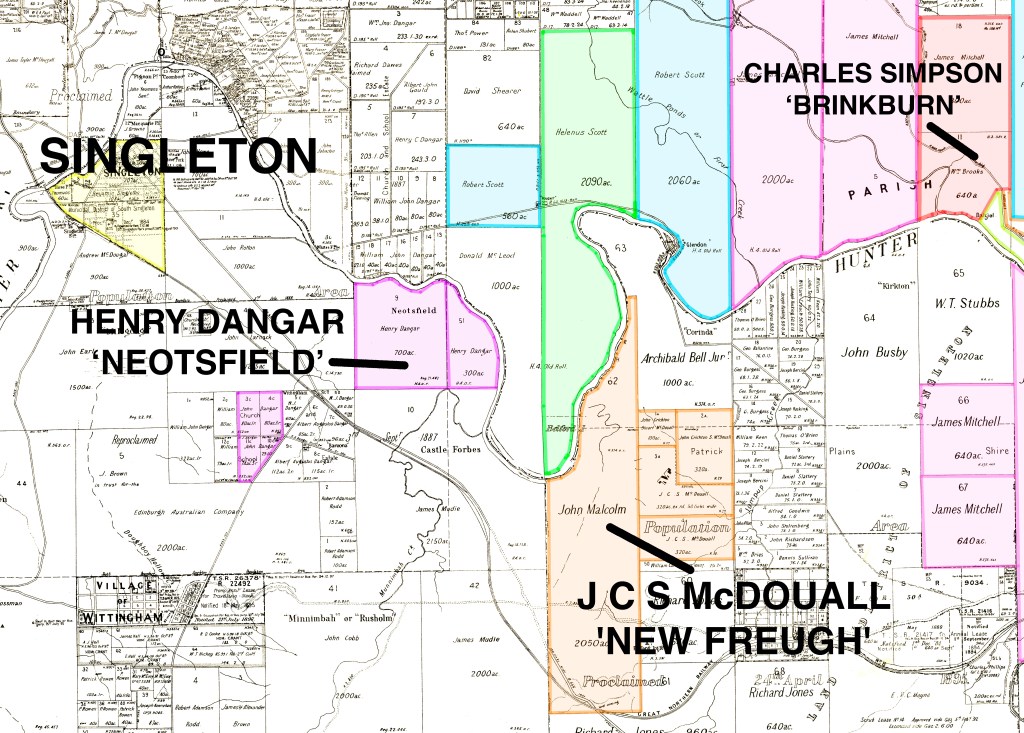
It was after the death of Frances and George’s insolvency, that George and Ann Gray set out to emigrate to join his brother in law, now a widower, Edmund Bull and his family of three young children. The story recent family conveys, is that Edmund Bull wrote to his brother in law George Gray to come to the new colony for work. After his time in Winchester Gaol it must have been a better prospect for George to come to a new place and start again with new prospects. The colony was in need of qualified tradesmen so no doubt a stonemason with building experience would have been seen as an asset to the colony and John Crichton Stuart McDouall a local Singleton JP and magistrate who was the new owner of New Freugh Station.
George and Ann Gray could never have known the fate that would befall Ann and their baby son on the voyage to their new life but George had little option but to continue on in the new colony as they had planned.
On his immigration ships records George Gray stated he had a brother in law, Edmund Bull employed with ‘Mr McDoull’, the owner of ‘New Freugh Station’ near Singleton.1

When the family disembarked from the ‘Thomas Arbuthnot’, George and his family set off to join his brother in law Edmund Bull at ‘New Freugh’ Station a little after their arrival in Morpeth sometime in February 1849.2
There is limited information about George Gray and his short time in the new colony. Snippets can be gleaned from his son George Abner’s journal and newspaper articles by his family. There is very little official information.
To gain a fuller picture of George Gray we need to look to the people he worked with and their activities along with any records we can glean about George Gray, Edmund Bull and Benjamin Baker’s families as the three men worked and lived in close proximity at New Freugh and what was then known as ‘the folly’ or Waratah in Newcastle.
George Gray at New Freugh and the Singleton District
The presumption is that George Gray was working for McDouall on New Freugh based on his immigration record but he could have just leased or had a hut provided for him whilst he worked elsewhere. On different documents from the Isle of Wight until his death in 1861 at Waratah, Newcastle, George Gray’s occupation is listed as ‘stonemason’, ‘builder’, ‘carpenter’ and contractor.
We do know he arrived at New Freugh about February 1849 and remained there until not long after he married to his second wife Emma Gray nee Dyer at Whittingham near New Freugh in July 1850. In June/July 1851 his daughter Georgina was born at Waratah near Newcastle recorded by his son George Abner Gray as the first white child born there.3
His daughter Olive Jane Gray’s death certificate lists her father’s occupation as ‘architect’. There was no formal training at the time and he is more likely to have been a builder who designed houses he built.
The only direct recording of their time at New Freugh station is in the journal of his son George Abner Gray. He recalls that: ‘After a year or so [ after arriving at New Freugh so about we shifted to another place 2 miles away. Father was building a house there, my sister, brother and I were with him.‘ 4
This account is followed up by George Abner Gray’s recollection of the wedding night of his father and Emma Dyer when he snuck away from his Uncle Edmund Bull’s place to his father’s place where the wedding party was happening ‘along a narrow cattle track through the bush about 2 miles to my Faddy.’ 5
George Abner Gray also recalls an encounter with a fearsome Aboriginal man they called ‘Better Bread’ recounting that his sister and brother ran to ‘Mrs Baker who lived about 300 yards’ away from the Gray family hut.6
George Gray ‘Stonemason’ & All Saints Singleton – A family Story
There is a family story is that George Gray was involved in the building of the new church at Singleton largely paid for by Henry Dangar Esq so far this has not been verified by any documentation. It is recorded here if any future documentation that may arise that links him to this church building. Being a qualified Stonemason it is possible he could have had some role in this building especially as J C S McDouall was recorded at the opening ceremony in 1851 and Henry Danger’s close relationship with the building of this church. He was another Magistrate living to the west of New Freugh towards Singleton at his farm ‘Neotsfield’ and working in the area with McDouall and Charles Simpson.
Colonial Architect Edmund Blacket and the contractor Turner & Co are linked to the final original All Saints Church at Singleton consecrated in March 1851 and ‘was the first church project by Edmund Blacket after his arrival in Sydney in 1842. He delivered the design for a church at Patrick Plains (Singleton) to Bishop Broughton soon after. The building was of stone with a chancel, nave, west porch and a double bell belfry.12
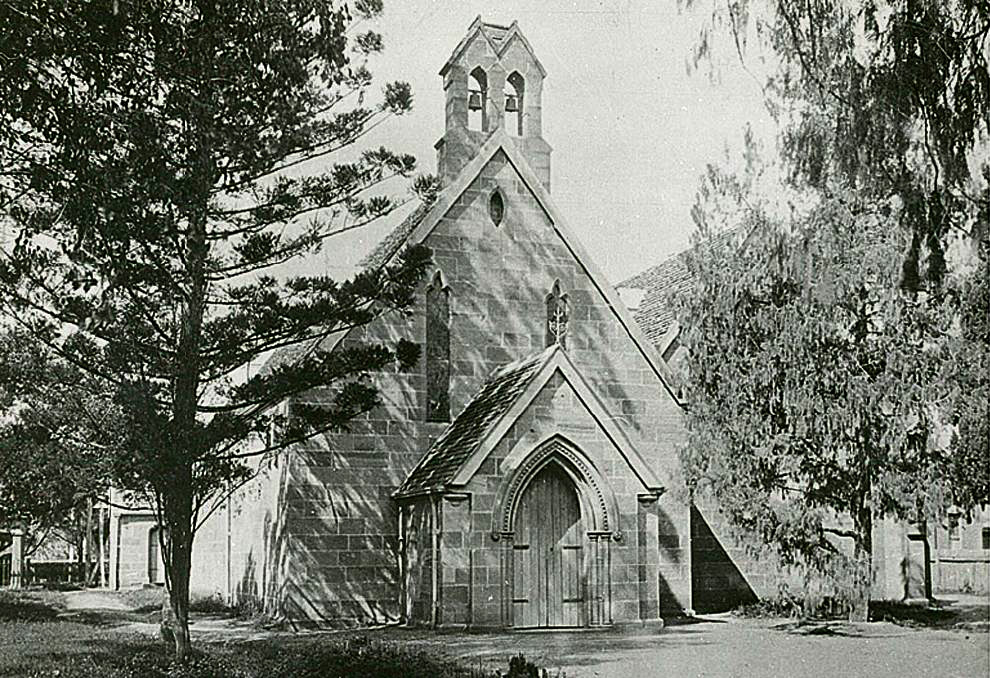
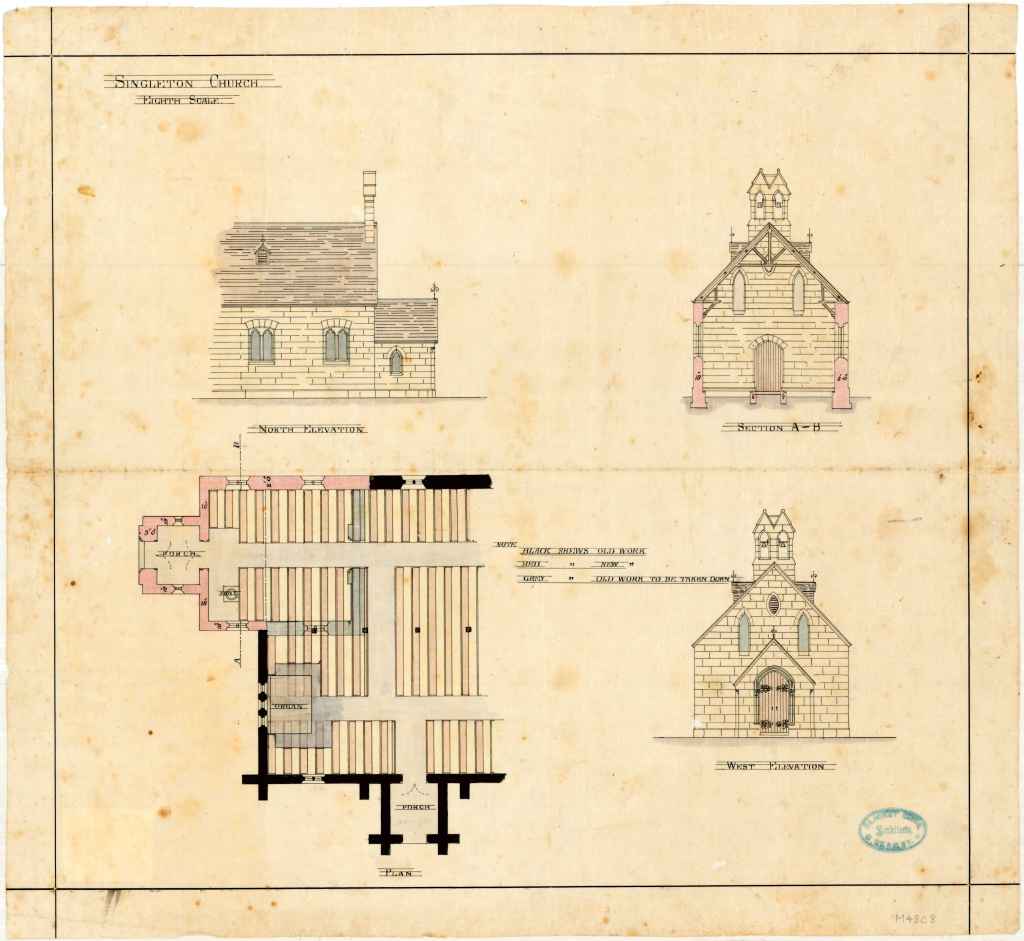
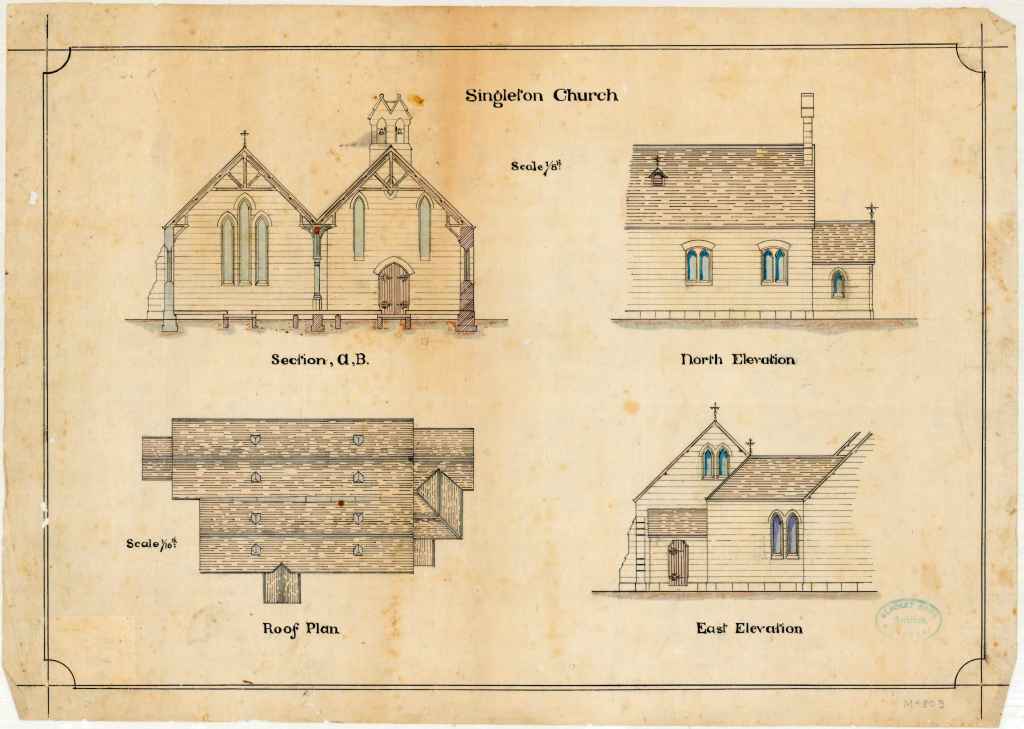
The progress in building the church was reported on in the Maitland Mercury and Hunter River General Newspaper from when George Gray arrived in 1849 and throughout 1850 until it was completed in November but was still awaiting the pews to be made and installed.
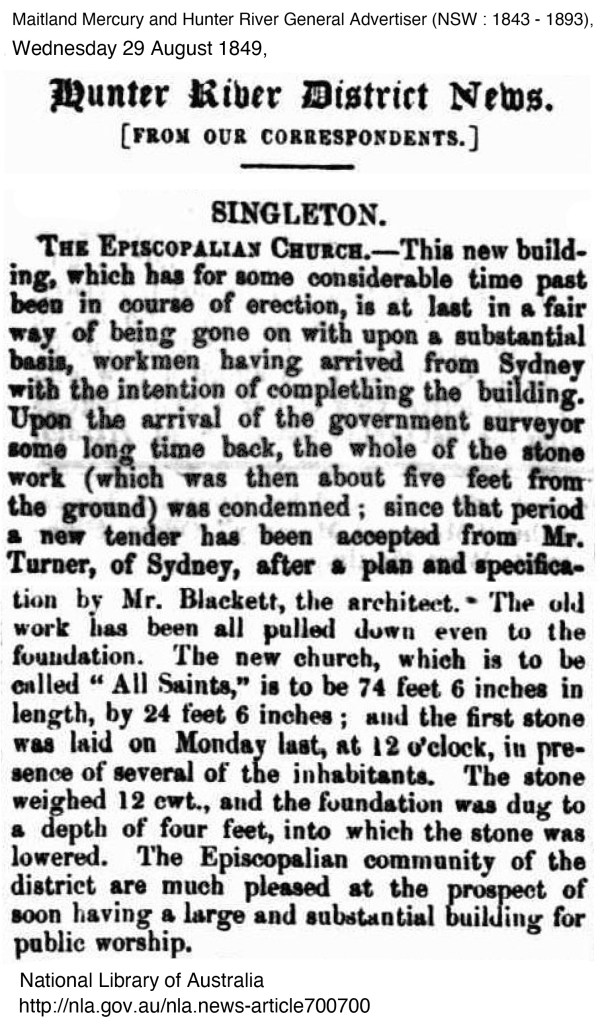
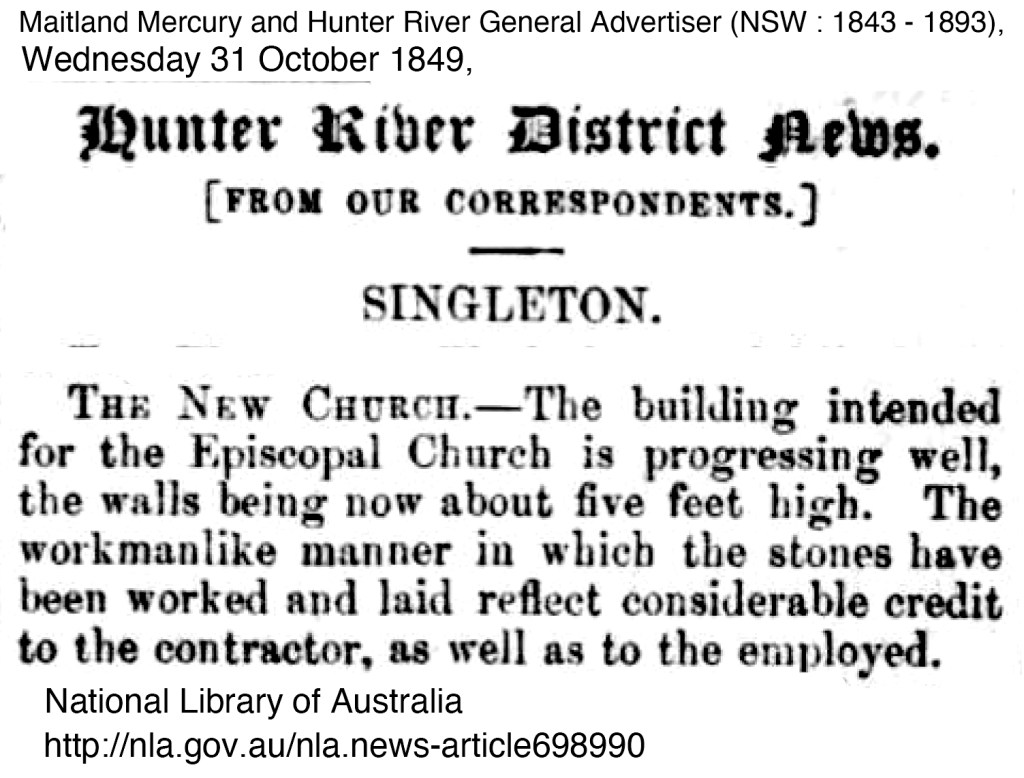
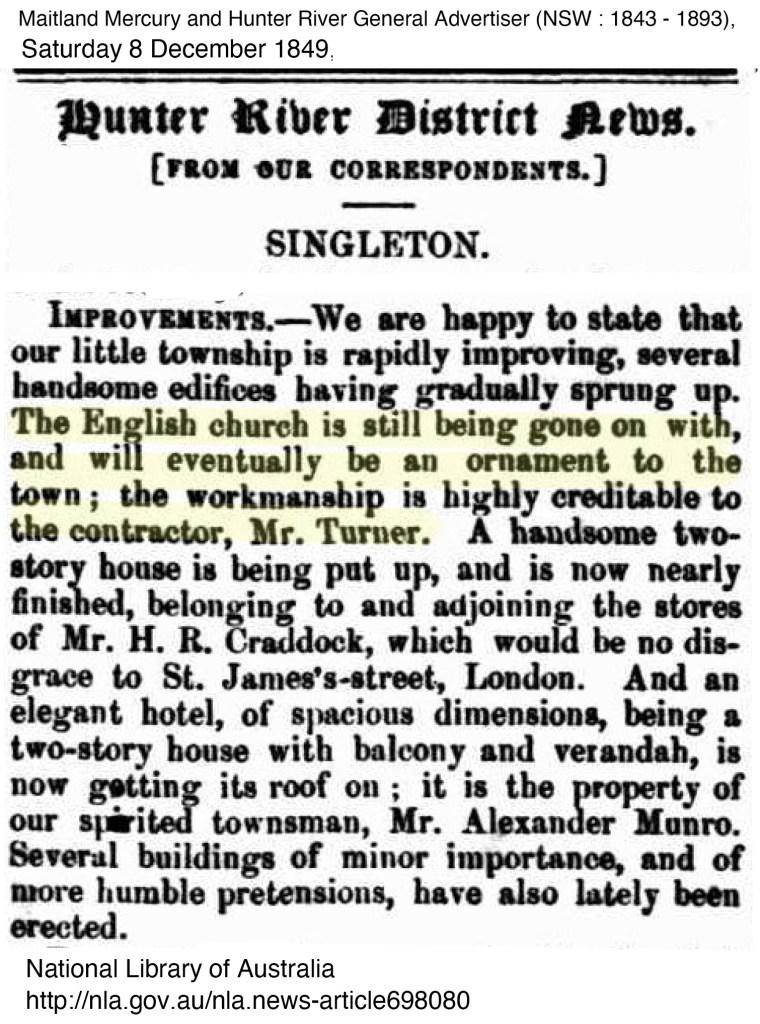

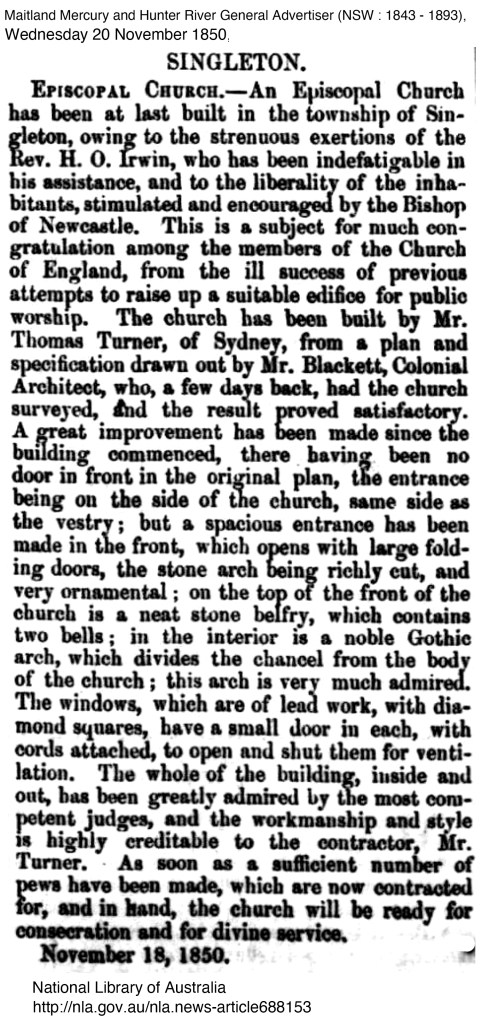
The church building was finally completed by the end of 1850 and was consecrated on the 19 March 1851.
Of note is the attendance and reporting of J C S McDouall at the consecration. Although not named it is likely that another JP and magistrate who was to become a pivotal person in the life of George Gray and his family also attended as one of the ‘Esquires & etc’. Charles Simpson JP Esq of Black Creek, an associate of McDouall’s was also working as a magistrate in the Singleton area at that time.
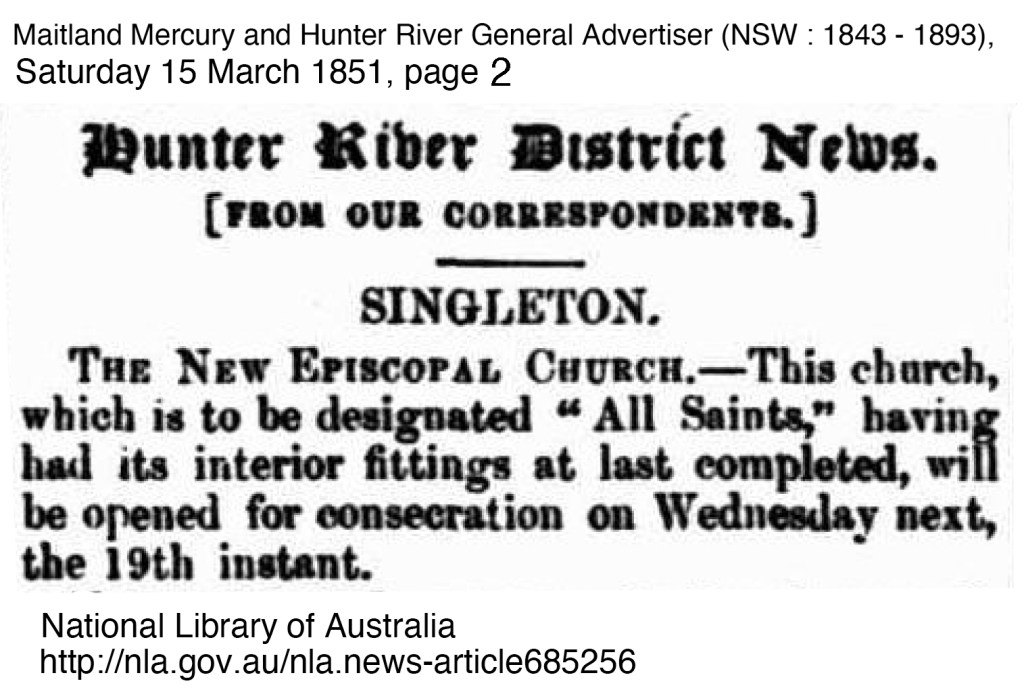
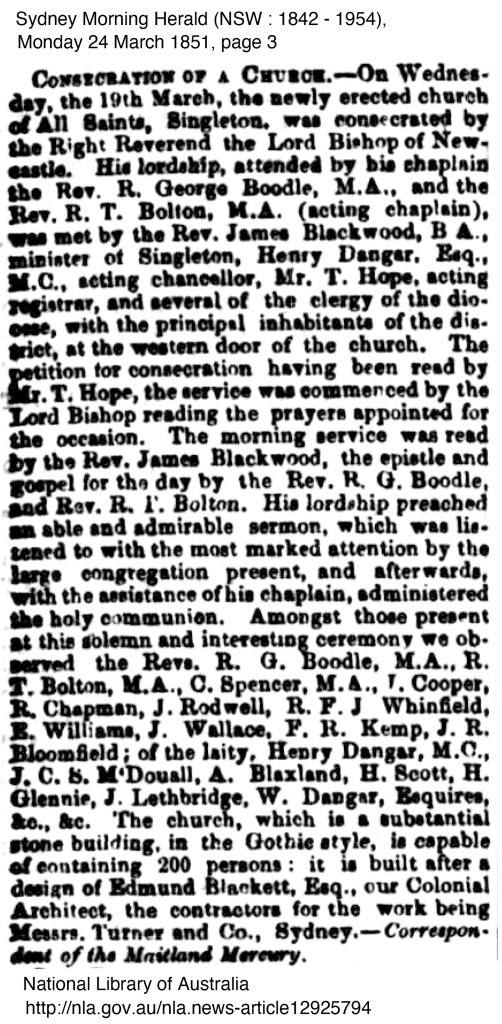
The original church is no longer standing as the building was deteriorating ‘and in 1907 it was decided to demolish and replaced it with a church of grand design.’ The new ‘All Saints’ Anglican Church was opened and consecrated on April 16, 1913, at a cost of 24,450 pounds, most of which was donated by Mr Dangar.’ 12
It should be noted that Bill Gray and his cousin Bob Gray (the great grandson of James Walter Thomas Gray who was a son of George Gray and Emma Dyer) state: We are certain that George renewed his association with Mr Turner the building contractor and Mr Blackett the architect involved in the New Freugh church, and worked for them on the growing number of stately houses being built in the Folly. This time frame does align with when George Gray left New Freugh and went to ‘the folly’ by June 1851. There is to this point no documented evidence that the family story that George Gray worked for Edmund Blackett along with the contractors Turner & Co in Newcastle, this does not mean that it will not come to light in the future. Edmund Blackett was employed to design other buildings and structures in the Newcastle and Maitland districts between 1852 and 1861.
George Gray at New Freugh
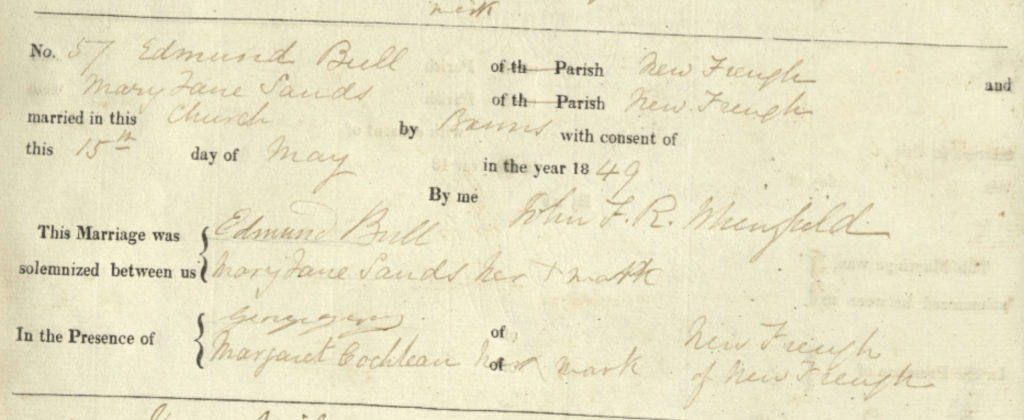
When George Gray’s brother in law Edmund Bull married again to Mary Jane Sands 15 May 1849, they listed ‘New Freugh’ as their address. George Gray was a witness to the marriage; his address was also given as ‘New Freugh’.13
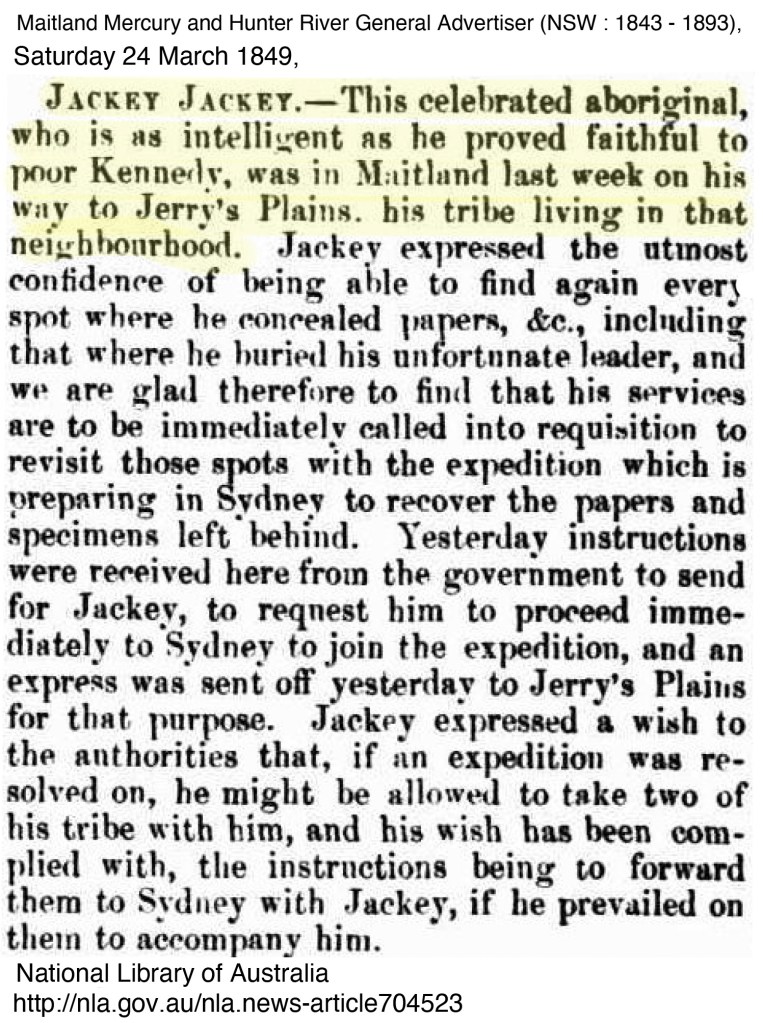
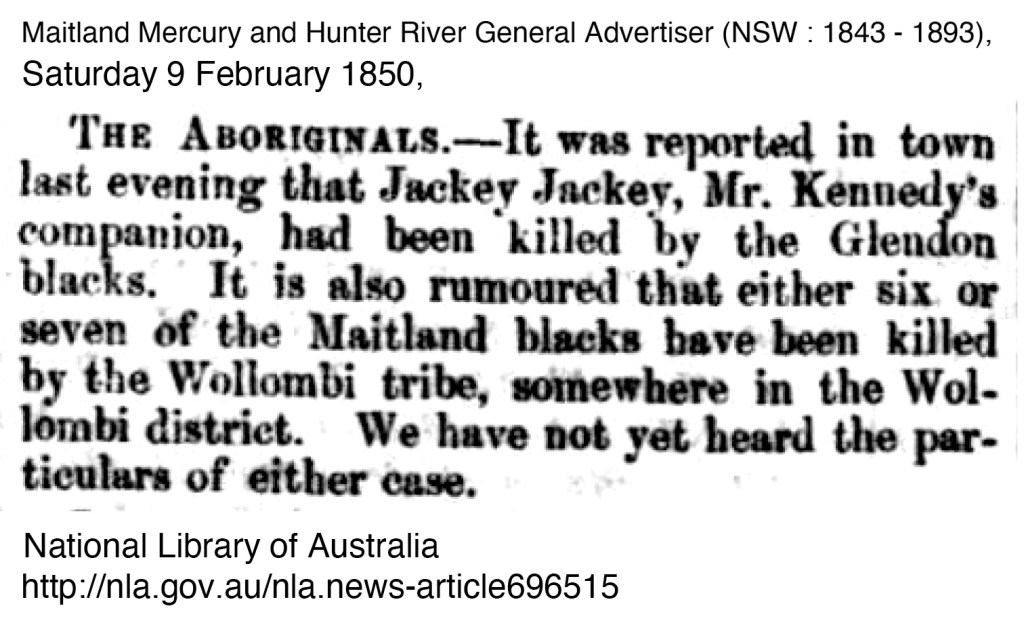
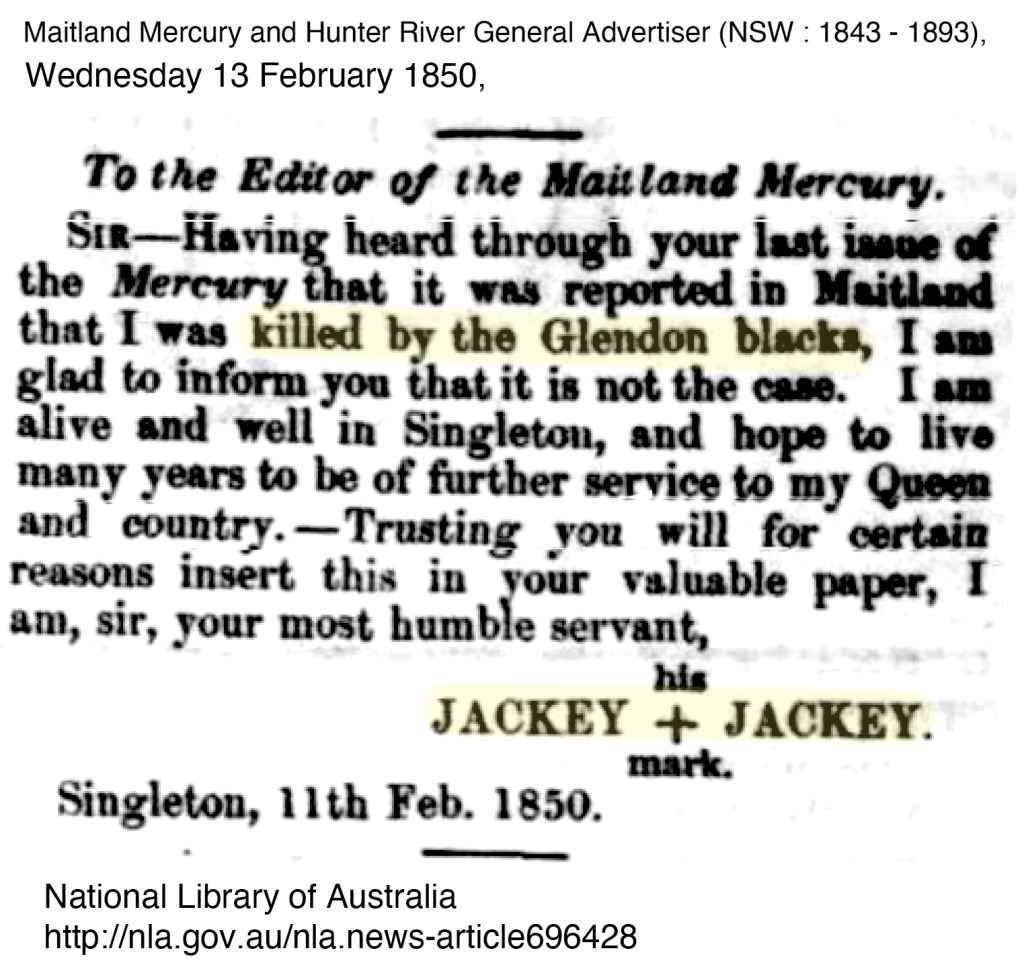
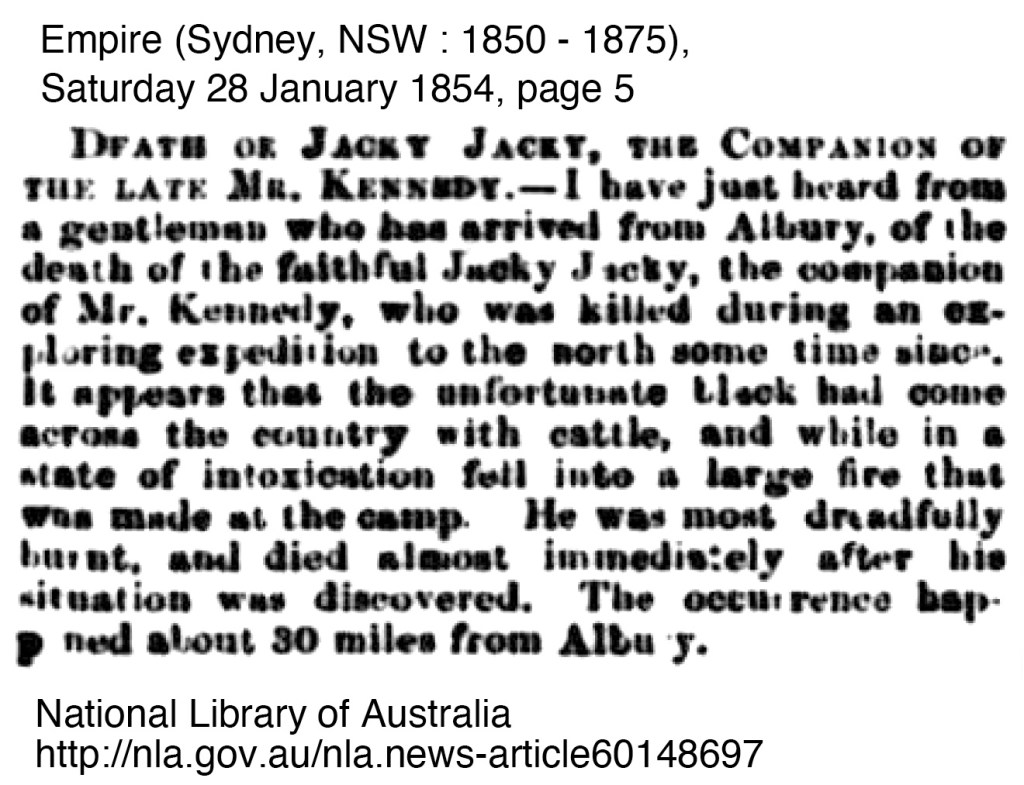
George Abner Gray in his journal recalls: George Abner goes on to describe ‘a great fight’ which included ‘Jackey Jackey the aborigineal who went with Kennedys Expedition‘. 15
Edmund Besley Court Kennedy J. P was an explorer who died after being speared by men from a local tribe on Cape York. His sole companion Jackey Jackey whose tribale named was Galmahra, stayed with him holding him as he died. Jackey Jackey then walked back alone and after 10 days arrived back at to the supply ship on 23 December 1848. There are several reports of Jackey Jackey in the Maitland newspaper from 1849 until his death in 1854. The first report talks of him returning to his tribe at Jerry’s Plains west of Singleton. In February 1850 there was a report of a fight at Glendon with Jackey Jackey being killed. He did not however died with his later death being recorded in January 1854.
George Gray married again on 29 July 1850 and his son George Abner, who at the time would have been aged about 4 years, gives his account of in his journal about the wedding; “A young woman came up from the coast and my Father and her soon made a match, likely my father thought she was the only woman in Australia, so he made no delay in marrying her. The day of the wedding I was sent back to the station as I expect I was likely to be a nucance.
At the station were my Uncle and cousins, also the old cook I spoke of.” 19
George Abner continues with his the telling of his adventures that night in getting back to his father ‘Faddy’ and his wedding through the bush at night until; “I cept running and finly I came to the house where the wedding was in full swing. Someone heard me crying and came to meet me – they knew who I was and told me Father was inside. I rushed in headless of not being drest and I saw Faddy sitting beside his bride. I ran up and fell down between his knees more dead than alive. He took me up and took me home and put me to bed, and in a few seconds I was asleep. I must have been in the bush over 5 hours.” 20
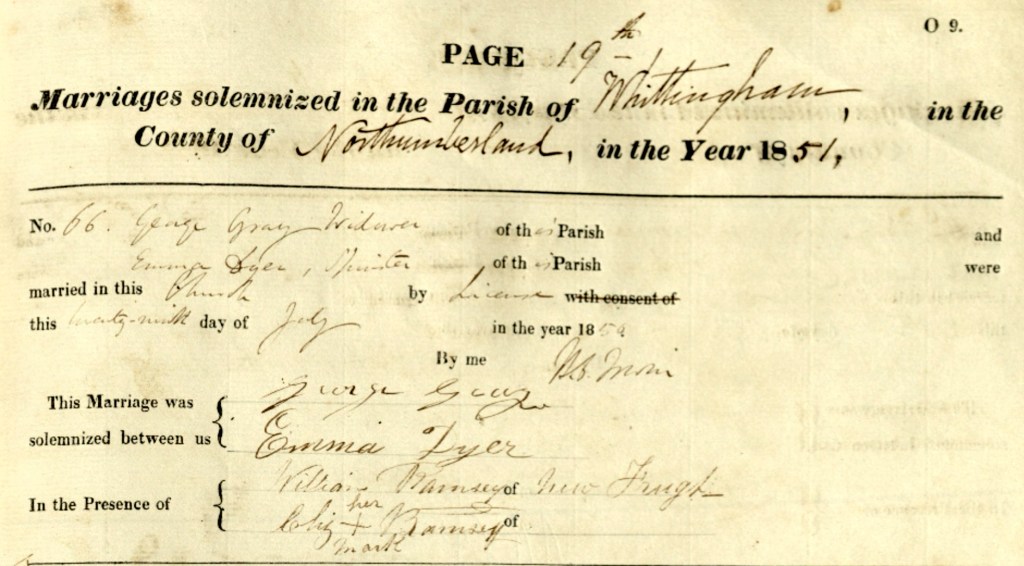
George Gray’s second wife, was Emma Perron Dyer who had arrived with her family on the ship ‘Emmigrant’ on 8 January 1849. When she arrived she was aged 21 years and her occupation was a ‘Dairymaid’. She travelled with her parents Thomas a farmer, and mother Grace, along with six brothers and sister; William ‘farm labourer’ 14 years, Ala ‘Nursemaid’ 14 years, Sarah 12 years, Jane 10 years, Betsy 8 years & Walter Thomas aged 6 years. They came from ‘Longlode’ [Long Load], Somersetshire, England.21
‘Shortly after we all, excepting my sister, went to the cost. She went back to the station with friends – she remaind there for about 2 years.’ 22
References
- NSW State Archives: GRAY George Assisted Immigrants Index 1839-1896 Age: 31 | Ship: Thomas Arbuthnot | Year: 1849 | Copy: Reel 2135, [4/4786] Page 242; Reel 2460, [4/4914]
- Online Ancestry record : Researched at Mitchell Library Sydney. Records Microfilmed under the Australian Joint Copy Project. PRO Reel 6887 CY2031 reel A1251 170 Register of Births and Deaths At Sea 1847-1854 Thomas Arbuthnot – EVELYN SMITH
- WARATAH 80 YEARS AGO REMINISCENCES OF A PIONEER VETERINARY by George Abner Gray – The Newcastle Sun (NSW : 1918 – 1954) Monday 28 March 1932 https://trove.nla.gov.au/newspaper/article/165367750?searchTerm=george%20abner%20gray%20the%20folly%20waratah
- The Journal of George Abner Gray 1846 – 1941 from the Original Clarence River Historical Society Grafton Second Edition 1975 page 5
- The Journal of George Abner Gray 1846 – 1941 from the Original Clarence River Historical Society Grafton Second Edition 1975 page 12
- The Journal of George Abner Gray 1846 – 1941 from the Original Clarence River Historical Society Grafton Second Edition 1975 page 10
- Early Architects of the Hunter Region: A Hundred Years to 1940 by Les Reedman page 148
- Singleton Argus April 5 2013 by Di Sneddon https://www.singletonargus.com.au/story/1409250/all-saints-anglican-church/
- Marriage Register Whittingham – Parish of New Freugh – Marriage – Edmund Bull & Mary Jane Sands – 15 May 1849 Singleton Marriage Register, 1840 – 1870 Page 21 – Newcastle Anglican Register, University of Newcastle
- The Journal of George Abner Gray 1846 – 1941 from the Original Clarence River Historical Society Grafton Second Edition 1975 page 5
- The Journal of George Abner Gray 1846 – 1941 from the Original Clarence River Historical Society Grafton Second Edition 1975 page 6
- The Journal of George Abner Gray 1846 – 1941 from the Original Clarence River Historical Society Grafton Second Edition 1975 page 12
- The Journal of George Abner Gray 1846 – 1941 from the Original Clarence River Historical Society Grafton Second Edition 1975 page 13
- NSW State Archives – Assistant Immigrant Records – DYER Emma P Assisted Immigrants Index 1839-1896 Age: 21 | Ship: Emigrant | Year: 1849 | Copy: Reel 2135, [4/4786] Page 351; Reel 2459, [4/4908] INX-9-142548
- The Journal of George Abner Gray 1846 – 1941 from the Original Clarence River Historical Society Grafton Second Edition 1975 page 14
 George Gray - Stonemason & Builder